Showing posts with label Historical. Show all posts

Monday, April 8, 2024

Unveiling the Last Requests of Alexander the Great: A Tale of Mortality and Legacy

 The story of the three last requests of Alexander the Great is a legendary tale often recounted in various forms. One popular version goes as follows:

As Alexander lay on his deathbed, his generals and closest advisors gathered around him, anxious about the fate of his vast empire. Sensing his end was near, Alexander made three final requests:


His physicians carry his coffin: 

Alexander knew that even the most skilled doctors couldn't save him from death, so he requested that they carry his coffin as a reminder of human mortality. This request symbolized his humility and acknowledgment of the limits of human power.


That his treasures be scattered along the path to his tomb: 

Despite amassing great wealth during his conquests, Alexander realized that material possessions held little significance in the face of death. By scattering his treasures, he wanted to show that earthly riches were transient and meaningless in the afterlife.


That his hands be left dangling outside the coffin: 

In his final moments, Alexander wanted to convey that even the mighty conqueror of the known world would depart from this world empty-handed. This request served as a reminder of the ephemeral nature of power and the equality of all in death.
Monday, April 1, 2024

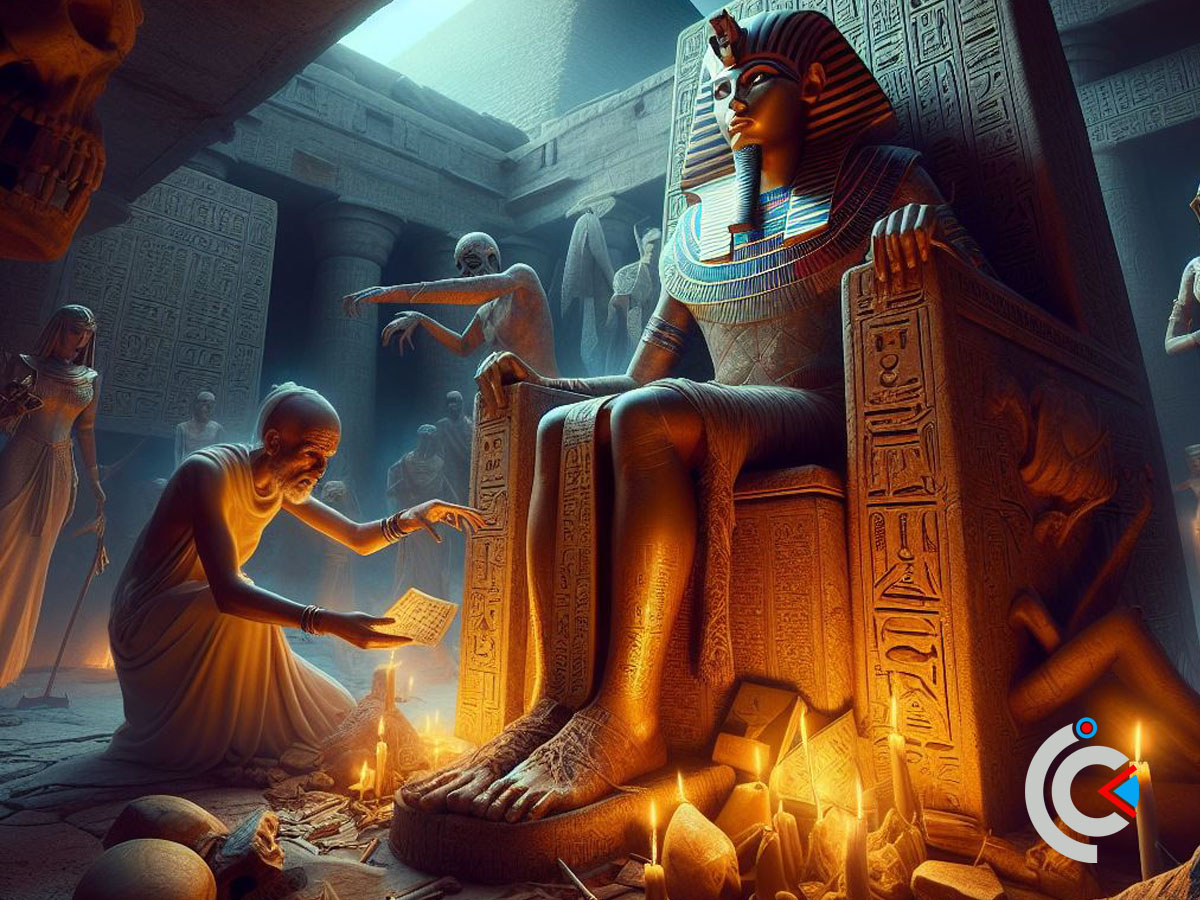
"Exploring the Mysteries of Egypt's Pyramids: Unraveling Ancient Enigmas and Legendary Phenomena"

"Exploring the Mysteries of Egypt's Pyramids: Unraveling Ancient Enigmas and Legendary Phenomena"


There have been various mysterious events and phenomena associated with the pyramids of Egypt over the years, although many of them are more rooted in speculation, legend, and sensationalism rather than concrete evidence. Some of these alleged mysterious events include:


Unexplained noises: 

There have been reports of strange sounds coming from within the pyramids, such as echoing or rumbling noises. Some speculate these sounds could be attributed to natural causes like shifting stones or air currents, while others have suggested more supernatural explanations.


Electromagnetic anomalies: 

Some researchers have claimed to detect unusual electromagnetic activity within the pyramids, though the significance and cause of these alleged

Friday, March 29, 2024

Plato's Insight on the Eternal Impact of Philosophy and Spirituality

 One powerful statement by Plato about philosophy and spirituality comes from his work "Phaedrus." In this dialogue, Plato writes:

"The soul takes nothing with her to the next world but her education and her culture; and these, it is said, are of the greatest service or of the greatest injury to the dead man, at the very beginning of his journey thither."

This statement emphasizes the importance of philosophical and spiritual development during one's life, suggesting that these aspects of self are crucial not only for this life but also for what may follow after death. It reflects Plato's belief in the eternal significance of philosophical and spiritual pursuits.


Wednesday, March 20, 2024

"Venus, Goddess of Love and Beauty: Mythology, Symbolism, and Influence"

 Venus, known in Greek mythology as Aphrodite, is the goddess of love, beauty, desire, and fertility. She is one of the major Olympian deities and holds a prominent place in ancient mythology and culture.

In art and literature, Venus is often depicted as a stunningly beautiful woman, radiating charm and allure. She is typically portrayed with long flowing hair, perfect features, and an enchanting aura. Often, she is shown accompanied by symbols of love and desire, such as doves, roses, and myrtle.


Venus's birth is one of the most famous stories in mythology. According to legend, she emerged fully grown from the foam of the sea, near the island of Cyprus, after the god Uranus was castrated and his genitals thrown into the sea. This myth emphasizes her connection to the sea and her association with beauty and fertility.


Venus is also closely associated with romantic love and passion. She is often depicted in mythological tales as a passionate and sometimes capricious figure, capable of inspiring both intense desire and deep devotion. Her romantic escapades and affairs with both gods and mortals are frequent

Sunday, March 17, 2024

"Mata Hari-The Enigmatic Life of a Dutch Exotic Dancer, Courtesan, and Alleged Spy"

 Margaretha Geertruida Zelle, known by her stage name Mata Hari, was a Dutch exotic dancer, courtesan, and alleged spy who gained notoriety during the early 20th century. Born on August 7, 1876, in Leeuwarden, Netherlands, Mata Hari's life was marked by her captivating performances, scandalous personal affairs, and her controversial espionage trial during World War I.

Physically striking with dark hair and a mesmerizing presence, Mata Hari captivated audiences in Paris with her sensual and provocative dance routines. Adopting the name "Mata Hari," which means "eye of the day" in Malay, she cultivated an exotic persona that added to her allure.


Her performances often incorporated elements of Eastern mystique, nudity, and suggestive movements, challenging societal norms of the time. Mata Hari's stage presence and uninhibited demeanor made her a sensation in Parisian society, attracting the attention of wealthy and influential men.


However, Mata Hari's fame was overshadowed by accusations of espionage during World War I. She was accused of using her relationships with high-ranking military officers and politicians to obtain military secrets for the Germans. Despite vehemently denying the charges, Mata Hari was arrested by French authorities in 1917.


Her subsequent trial was highly publicized and sensationalized, contributing to her image as a femme fatale and spy. Mata Hari was ultimately found guilty of

Thursday, March 14, 2024

"Prometheus" The Eternal Flame of Offline Rebellion (An analysis of Mythological paintings)

 Prometheus is a complex character in Greek mythology, embodying various themes and ideas that have fascinated storytellers, philosophers, and artists throughout history. Here's an analysis of his character:

Cunning and Intelligence: Prometheus is renowned for his cleverness and intelligence. His name, which means "forethought" or "forethinker," underscores his ability to foresee consequences and plan. His act of stealing fire from the gods demonstrates his resourcefulness and willingness to challenge the established order.


Defiance of Authority: Prometheus's rebellion against Zeus and the Olympian gods is a central aspect of his character. By stealing fire and giving it to humanity, he defies Zeus's will and seeks to empower mortals with knowledge and technology. This defiance represents a challenge to the divine hierarchy and the arbitrary exercise of power.


Benefactor of Humanity: Despite the risks involved, Prometheus chooses to help humanity by giving them fire, which symbolizes not only

AD

Roma art

Featured Post

"The Price of Experience: Commodification in a Consumer-Driven Society"

 In a consumer-driven world, many aspects of human experience—relationships, emotions, and even identity—can be commodified. This commodific...