
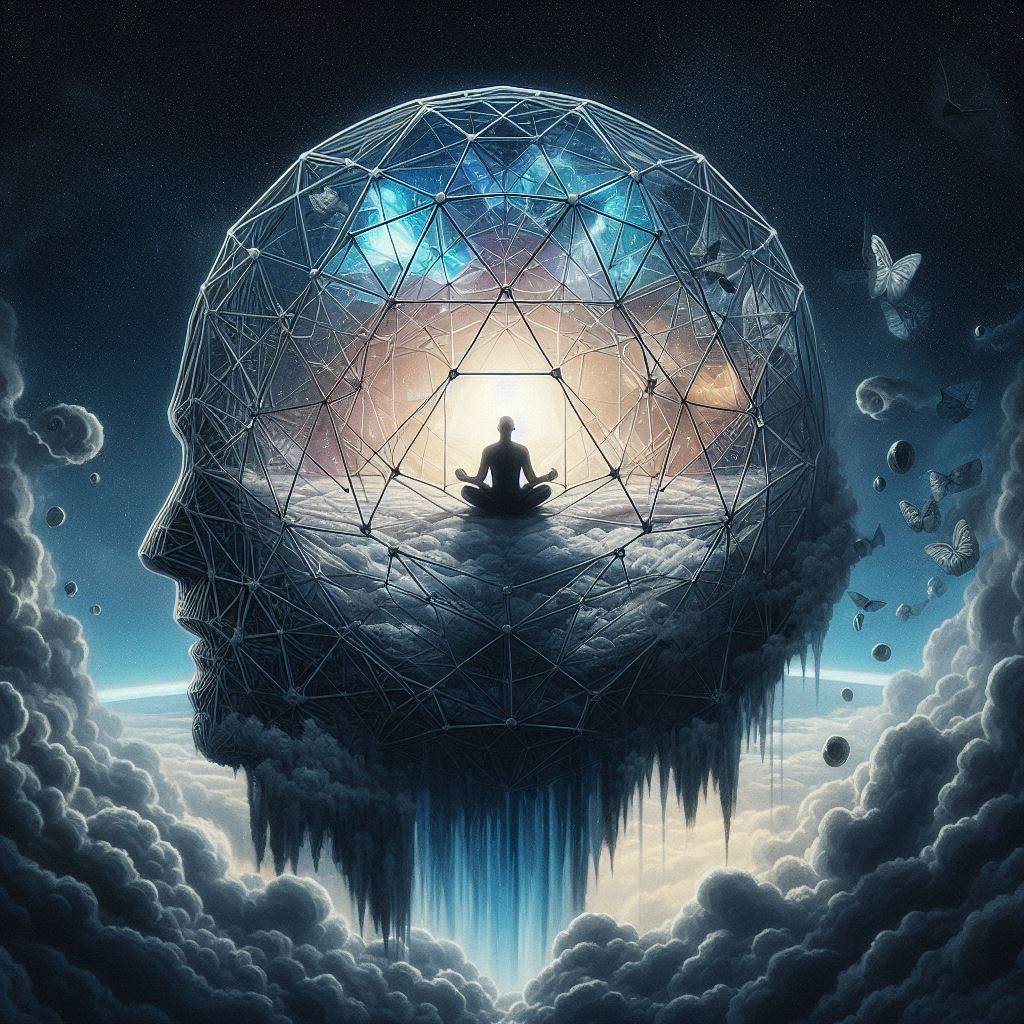
The idea that "man is only trapped in thoughts" suggests that much of human suffering and limitation arise from the way we think. It reflects a philosophical or psychological perspective that our mental processes—our beliefs, worries, fears, and desires—can confine and restrict us. Here's a deeper look at this concept:
Mental Constraints: Our thoughts can create self-imposed barriers. For instance, fear of failure or self-doubt can prevent us from pursuing our goals. When we are overly concerned with what might go wrong, we might not take the necessary steps toward achieving our desires.
Perception of Reality: How we interpret events largely depends on our thoughts. Two people can experience the same event but perceive it differently based on their mental framework. This highlights the subjective nature of our reality, where thoughts shape our experience more than objective reality itself.
.jpeg)
.jpeg)

.jpeg)

.jpeg)
Mindfulness and Awareness: Many philosophies and psychological practices advocate for mindfulness, which involves observing our thoughts without becoming entangled in them. By becoming aware of our thought patterns, we can start to break free from the automatic and often negative ways we think.
Freedom Through Understanding: Understanding that we are not our thoughts but rather the observer of them can lead to greater mental freedom. Practices like meditation often aim to help individuals recognize this distinction and reduce the power of disruptive or limiting thoughts.
Philosophical Insight: Philosophers like Stoics and Eastern thinkers have long suggested that freedom comes not from changing external circumstances but from changing our internal responses to them. By controlling our thoughts and attitudes, we can find peace and resilience regardless of external situations.
In essence, being "trapped in thoughts" means that our mental constructs can limit our experiences and potential. Recognizing and addressing these mental constraints can lead to greater freedom and fulfillment.
#Mental Health #Self-Awareness #Mindfulness #Philosophy #Personal_Growth #Cognitive_Psychology #Stoicism #Meditation #Thought_Patterns #Overcoming-Self-Doubt


.jpeg)


