Showing posts with label art. Show all posts

Friday, October 4, 2024

"Silence is the language of God, all else is poor translation." - Rumi

Certainly. The statement "Silence is the language of God, all else is poor translation" reflects that the deepest, most profound truths and experiences of spirituality can often be found in silence or stillness rather than in words or language. Here's an idea of what this statement means:

Silence as the Language of God: In many spiritual traditions, including Sufism (the mystical branch of Islam, to which Rumi belonged), silence is viewed as a means of connecting with the divine. It's seen as a state where one can transcend the limitations of ordinary perception and commune with the divine essence. In this sense, silence is considered the purest form of communication with God or the ultimate reality.


All Else is Poor Translation: This part of the statement suggests that any attempt to express the divine experience through language, such as words or concepts, is inherently limited and imperfect. Language, a human construct, can never fully capture the depth and richness of spiritual experience. Therefore, compared to the direct experience of silence or the divine presence, any attempt to articulate it through language is considered incomplete or inadequate.

Rumi's statement emphasizes the importance of stillness, contemplation, and inner silence in deepening one's spiritual understanding and connection with the divine. It suggests that while language may serve as a tool for expressing aspects of spirituality, the true essence of God or ultimate reality can only be apprehended in the silence of the heart and mind.


"Silence is the language of God, all else is a poor translation" Persian poet and mystic Jalal ad-Din Muhammad Rumi Rumi's works are known for their deep insights into spirituality, love, and the human experience, and this particular quote is about silence as a means of connecting with the divine. Reflects his understanding of importance.


Monday, July 15, 2024

"Understanding Environmental Destruction: Causes, Effects, and Solutions"

 Environmental destruction refers to the degradation of the natural environment through human activities that cause harm to ecosystems, biodiversity, and natural resources.

Deforestation: The clearing of forests for agriculture, logging, or urban development, leading to habitat loss, soil erosion, and disruption of the carbon cycle.


Pollution: The release of harmful substances into the air, water, and soil, such as industrial waste, plastic debris, and chemical runoff. This can result in health problems for humans and wildlife, contamination of water sources, and degradation of ecosystems.


Climate Change: The alteration of global climate patterns due to the increased concentration of greenhouse gases from activities like burning fossil fuels, deforestation, and industrial processes. This leads to extreme weather events, rising sea levels, and shifts in ecosystems.


Overfishing: The depletion of fish stocks due to unsustainable fishing practices, which can disrupt marine ecosystems and threaten species with extinction.


Loss of Biodiversity: The extinction of species and loss of genetic diversity due to habitat destruction, pollution, climate change, and overexploitation. This undermines ecosystem stability and resilience.


Soil Degradation: The decline in soil quality and productivity due to erosion, compaction, contamination, and nutrient depletion. This can result from unsustainable agricultural practices, deforestation, and urbanization.


Urbanization: The expansion of cities and infrastructure, which often leads to the destruction of natural habitats, increased pollution, and greater demand for resources.


Waste Generation: The production of large amounts of waste, particularly non-biodegradable plastics, which can accumulate in the environment and cause pollution and harm to wildlife.


Resource Depletion: The unsustainable extraction and use of natural resources such as water, minerals, and fossil fuels, leading to shortages and environmental degradation.


Addressing environmental destruction requires a comprehensive approach involving sustainable practices, conservation efforts, pollution reduction, and policies aimed at protecting and restoring natural ecosystems.

Monday, June 3, 2024

"How Love Bridges the Gap Between Your Conscious and Unconscious Mind"


The idea that "love is filling the gaps between the conscious and unconscious elements of a person's mind" is a poetic and profound way to think about the nature of love and its impact on the human psyche. 


Bridging Awareness and Hidden Desires: The conscious mind encompasses our thoughts, actions, and awareness, while the unconscious mind holds our deeper desires, fears, and instincts. Love can act as a bridge, bringing to light hidden aspects of ourselves and integrating them into our conscious experience. This process can lead to greater self-awareness and personal growth.


Emotional Integration: Love often involves the integration of emotions that we may not be fully aware of. When we experience love, we might find ourselves facing feelings and reactions that come from deep within our unconscious. This integration can help us understand ourselves better and develop a more harmonious inner life.


Healing and Wholeness: Love can be a powerful healing force, helping to address past traumas or unresolved issues that reside in the unconscious. By providing a sense of safety and acceptance, love can encourage us to confront and work through these hidden parts of ourselves, leading to emotional healing and a sense of wholeness.


Enhancing Creativity and Intuition: The unconscious mind is a wellspring of creativity and intuition. Love, by connecting us more deeply to our unconscious, can enhance our creative abilities and intuitive insights. This can manifest in various forms, such as artistic expression, problem-solving, and a deeper understanding of the world around us.


Deepening Relationships: In the context of interpersonal relationships, love can foster a deeper connection between individuals by allowing them to share and explore both their conscious thoughts and unconscious feelings. This mutual exploration can lead to a more profound and meaningful bond.


Psychological Theories: Various psychological theories, such as those proposed by Carl Jung, emphasize the importance of integrating the conscious and unconscious mind for achieving individuation, or the process of becoming a fully realized individual. Love, in this sense, can be seen as a catalyst for this integration, promoting psychological growth and self-realization.


By filling the gaps between the conscious and unconscious, love not only enriches our personal experience but also facilitates a deeper understanding of ourselves and our connections with others

Thursday, May 16, 2024

" Know that the problem is, Knowing the problem as a problem, then the problem is solved.."

That's a succinct way to put it! Acknowledging and understanding the problem is often the first step toward finding a solution. It's like shining a light on the issue so you can see it clearly and figure out how to address it. It's all about awareness and perspective.

This quote emphasizes the importance of recognizing a problem for what it is. Sometimes, simply understanding and acknowledging that there is an issue can be the key to solving it. It suggests that the act of identifying the problem can in itself be a significant part of the solution process. This mindset encourages proactive problem-solving by promoting awareness and clarity.


#Problem-solving #Awareness #Perspective #Solutions #Mindfulness #Clarity #Self-awareness #Problem #identification #Proactive #approach #Reflection

Saturday, May 11, 2024

"Breaking Free from Attachment: How Letting Go Can Reignite Your Inner Flame"

Imagine attachment as a delicate thread connecting us to the world around us. When balanced, it acts as a lifeline, enriching our experiences and relationships. However, should this thread become too tightly wound, it begins to suffocate, constricting the flow of our inner selves.


In this metaphor, our inner self is akin to a flame—bright, dynamic, and ever-changing. But when we allow attachment to consume us, the flame flickers, struggling to breathe amidst the weight of our dependencies. Slowly, imperceptibly, our inner light dims, and we become like ghosts, mere echoes of our true selves, haunting the corridors of our own existence.


Yet, just as a ghost yearns for release, so too can we liberate ourselves from the shackles of attachment. By loosening the grip on external desires and embracing the freedom of detachment, we allow our inner flame to burn brightly once more, illuminating the path to self-discovery and genuine connection.


#Attachment #Inner #Self #Letting #Go #Self #Discovery #Personal #Growth#Emotional #Freedom #Mental #Health #Spiritual #Enlightenment #Mindfulness #Life #Balance

Saturday, March 23, 2024

The Mystery of letting go of pain is, Letting Go of Ownership

 Letting go of pain by letting go of power is indeed a profound conception that numerous people can relate to on a deep position. Then is a disquisition of this idea   


Power of Pain 

frequently, when we witness pain, whether it's emotional or physical, we tend to hold onto it tightly. We identify with our pain, letting it define us and shape our comprehension of ourselves and the world around us. This power can occasionally lead to a cycle of suffering, where we renewal history hurts or grievances, keeping them alive within us.  


 Release and Emancipation 

Letting go of power means releasing this tight grasp on our pain. It involves feting that pain is a flash experience, the commodity that we do not have to cleave to indefinitely. By releasing our power of pain, we free ourselves from its grip and open up space for mending and growth.   


Acceptance and Surrender 

Letting go of power does not mean denying or suppressing our pain. rather, it involves accepting it as part of our mortal experience without allowing it to consume us. It's about

Saturday, March 16, 2024

" Eternal Shadows: A Portrait of Vampiric Seduction"

 The concept of vampires has a rich and diverse history, rooted in folklore, mythology, and literary tradition from various cultures around the world. Here's a brief overview of vampire history and some related stories:

Origins in Folklore: 

The idea of the vampire dates back centuries, with early mentions found in ancient Mesopotamian, Greek, and Roman folklore. These early vampires were often depicted as demons or spirits who fed on the blood of the living.


Eastern European Folklore: 

The modern image of the vampire, as we commonly know it today, largely stems from Eastern European folklore, particularly from regions such as Romania, Bulgaria, and Serbia. In these traditions, vampires were often depicted as undead beings who rose

Sunday, February 25, 2024

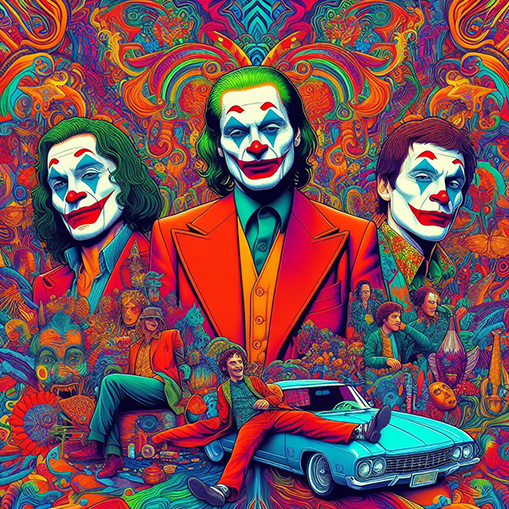
"Joker," Arthur's Verbal Odyssey: Exploring the Depths of Despair and Madness

Embark on a journey through Arthur Fleck's psyche as he grapples with existential questions, societal decay, and the darkness within. His words are not merely dialogue but windows into a troubled soul teetering on the brink of chaos.


Arthur Fleck, the protagonist of "Joker," is a character defined by his profound psychological struggles and societal alienation. Through his special verbal expressions, Arthur offers poignant insights into his inner turmoil, disillusionment with society, and descent into madness.


Arthur Fleck in "Joker" has several notable verbal expressions that contribute to the depth and complexity of his character. 


"For my whole life, I didn't know if I even really existed. But I do. And people are starting to notice.": This line reflects Arthur's longing for recognition and validation, as well as his growing sense of agency and empowerment as he begins to embrace his identity as the Joker.


"I used to think that my life was a tragedy, but now I realize, it's a comedy.": This statement encapsulates Arthur's transformational journey throughout the film, as he shifts from viewing himself as a victim of circumstance to embracing chaos and nihilism as sources of liberation.


"I just hope my death makes more cents than my life.": This darkly humorous quip highlights Arthur's cynical outlook on life and his resignation to the bleakness of his existence. It also reflects his desire for significance and recognition, even if it comes at the expense of his own life.


"You don't listen, do you? You just ask the same questions every week. 'How's your job?' 'Are you having any negative thoughts?' All I have are negative thoughts.": This line is a poignant expression of Arthur's frustration with the mental health system and the superficiality of his interactions with his therapist. It also underscores his sense of alienation and despair.


"Is it just me, or is it getting crazier out there?": This rhetorical question reflects Arthur's growing disillusionment with society and his perception of an increasingly chaotic and hostile world. It also serves as a thematic refrain throughout the film, highlighting the societal decay and moral ambiguity that permeate the narrative.


These verbal expressions not only reveal Arthur Fleck's internal struggles and worldview but also contribute to the film's exploration of existential themes such as identity, alienation, and societal breakdown.

Friday, February 23, 2024

Music is the language of emotions

Indeed, music has a remarkable ability to evoke and convey emotions. Across cultures and throughout history, music has served as a powerful medium for expressing feelings, whether joyous, melancholic, triumphant, or reflective. The combination of melody, harmony, rhythm, and lyrics can create a profound emotional impact on listeners, often bypassing the need for words to articulate what we feel. Music has the capacity to resonate with our innermost experiences, offering solace, inspiration, and connection. It's often said that music speaks directly to the soul, transcending linguistic and cultural barriers to touch us in profound ways. Whether it's the stirring strains of a symphony, the infectious beat of a dance track, or the heartfelt lyrics of a ballad, music has the extraordinary ability to articulate and communicate the complexities of human emotion.


Saturday, October 7, 2023

figure drawing - photoshop

 Nude figure drawing - It serves as a fundamental practice in art education, allowing artists to study anatomy, light, shadow, and gesture. Typically, live models pose in various positions, enabling artists to capture the dynamic and expressive qualities of the human form. This practice helps artists develop their observational skills, honing their ability to depict the human body realistically and artistically. Nude figure drawing has a rich history in the art world, from classical antiquity to contemporary art, fostering creativity and mastery of the human form.


Sunday, October 31, 2021

wpap illustration

 WPAP, or "Wedha's Pop Art Portrait," is a distinctive style of digital art known for its geometric and vibrant aesthetics. Created by Indonesian artist Wedha Abdul Rasyid, WPAP art is characterized by sharp angles, bold colors, and a grid-like structure. It often features portraits of individuals, celebrities, or fictional characters, stylized in a unique and eye-catching way.

To create a WPAP illustration, an artist typically starts with a reference image and then traces the subject's features using a series of geometric shapes, such as triangles, rectangles, and polygons. These shapes are meticulously arranged to form the likeness of the subject while maintaining a striking and abstract appearance. The color palette is usually bold and contrasting, enhancing the visual impact of the artwork.

WPAP illustrations have gained popularity for their modern and visually engaging approach to portraiture, making them a unique and captivating form of digital art.

AD

Roma art

Featured Post

"The Price of Experience: Commodification in a Consumer-Driven Society"

 In a consumer-driven world, many aspects of human experience—relationships, emotions, and even identity—can be commodified. This commodific...